Source Mobile Stage Trailer for Outdoor Events and Festivals
Compare 30 mobile stage trailer listings from Henan, China. Buyers can evaluate specifications like steel or aluminum construction, custom sizes, and diesel-powered options for outdoor events.
Key considerations
Products List
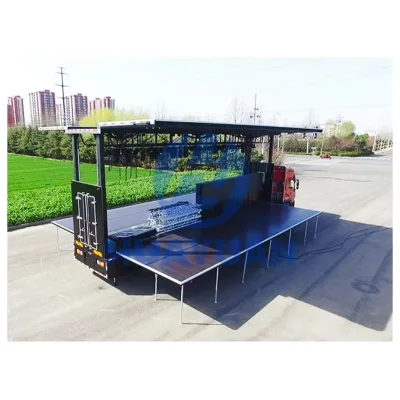
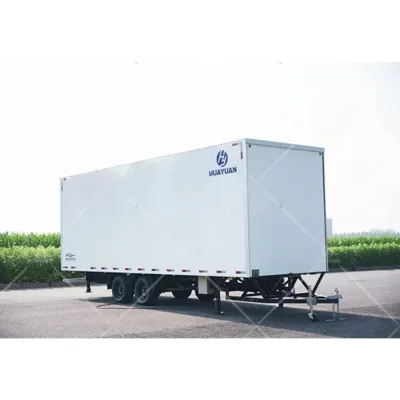
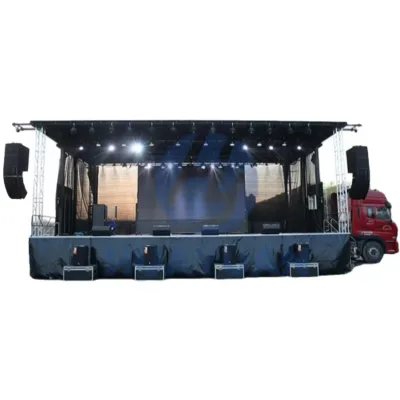
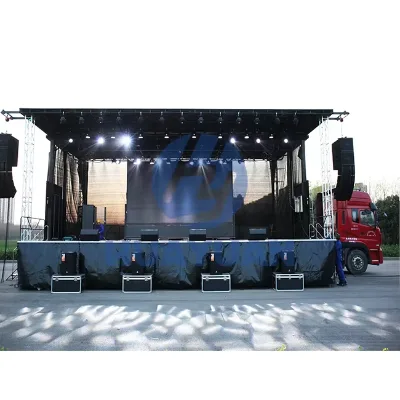
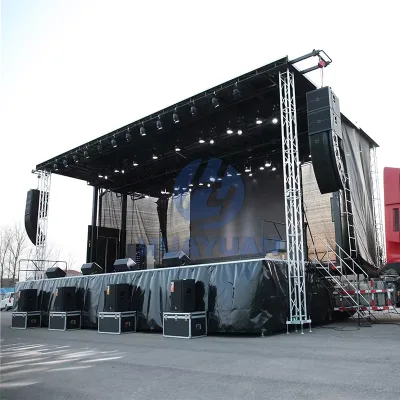
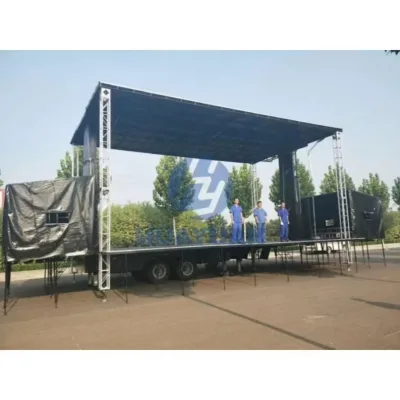


Comprehensive Sourcing Guide
Strategic Sourcing Guide for Mobile Stage Trailers
Procuring a mobile stage trailer represents a significant capital investment for event organizers, production companies, and rental agencies. The complexity of these units extends far beyond simple transportation; they are engineered environments that must withstand dynamic loads, variable weather conditions, and the rigorous demands of rapid deployment. This guide synthesizes available product data and industry standards to provide a disciplined framework for evaluating mobile stage semi-trailers. Buyers must approach this procurement process with a focus on structural integrity, regulatory compliance, and operational versatility to ensure a return on investment that aligns with long-term business goals.
Technical Architecture and Structural Specifications
The foundational element of any mobile stage trailer is its chassis and superstructure. Based on observed market data, the most common configuration utilizes a semi-trailer design with a gross vehicle weight capacity ranging up to 25,000 kg. The structural material is predominantly steel or Aluminum Alloy 6082-T6. The selection between these materials involves a trade-off between raw strength and weight efficiency. Steel offers high durability and lower initial costs, while Aluminum Alloy 6082-T6 provides superior corrosion resistance and a lighter profile, which can improve fuel efficiency and payload capacity during transit.
Dimensions are a critical variable in the procurement process. The observed data indicates a standard model number, such as HY-S455, with specific dimensions around 13,000 mm in length, 2,480 to 2,500 mm in width, and 4,100 mm in height. However, the market also supports custom sizes, with specifications ranging from 8x2.4x3.66 meters to larger configurations like 11.09x8.82 meters. Buyers must verify that the chosen dimensions comply with local road regulations regarding width and height limits. The stage floor thickness is another technical specification that requires attention; typical configurations include a baseboard of 18mm and an off-stage area of 12mm. This variation in thickness is designed to balance structural rigidity with weight reduction.
The transmission and power systems are equally vital. Most units observed utilize a manual transmission paired with a diesel engine, often with a displacement around 3.0L. For the stage itself, the power distribution system typically operates on 220V. A key differentiator in the market is the power source; while some units are self-powered with their own generators, others are designed to be towed without self-powered capabilities, relying on external power sources or the towing vehicle's auxiliary systems. The tire specification, such as 10.00R20, must be matched to the maximum payload capacity, which is observed to range between 15,001 and 20,000 kg.
Regulatory Compliance and Certification Verification
When sourcing heavy machinery and specialized trailers, regulatory compliance is non-negotiable. The primary certification observed in the current market data is ISO9001. This standard indicates that the manufacturer has established a quality management system, but it does not guarantee that every individual unit meets specific safety or performance metrics. Buyers must verify that the manufacturer holds valid, current ISO9001 certification and request evidence of third-party testing for the specific chassis and stage components.
Emission standards are another critical compliance factor. The observed data references the EURO 5 standard. In many jurisdictions, EURO 5 is the baseline for diesel engines, but some regions are moving toward stricter limits. Procurement teams must confirm that the engine's emission rating matches the legal requirements of the country where the trailer will be operated. Failure to comply can result in fines, operational bans, or the inability to import the vehicle.
Furthermore, the shape and configuration of the trailer, often described as square, must be evaluated against local road safety laws. While the product name "Mobile Stage Semi-Trailer" suggests a specific classification, the actual classification may vary based on the attached stage structure. Buyers should ensure that the manufacturer provides documentation confirming the vehicle's classification aligns with the intended usage, particularly regarding lighting, braking systems, and coupling mechanisms.
Cost Drivers and Financial Considerations
The price range for mobile stage trailers is extensive, with observed listings spanning from approximately $218 to $76,576.21. This vast disparity highlights the impact of customization, material selection, and included features on the final cost. The lower end of the spectrum likely represents basic chassis units or smaller, less complex stages, while the upper end reflects fully equipped units with advanced lighting, sound systems, and custom dimensions.
Several specific factors drive these costs. First, the material choice is a primary driver; Aluminum Alloy 6082-T6 units generally command a higher price than steel counterparts due to material costs and fabrication complexity. Second, the inclusion of integrated systems, such as a large screen system or specific LED tube core types (e.g., Type IV), significantly increases the unit price. Third, the level of customization available, such as specific dimensions or color options, adds to the manufacturing time and cost.
Buyers must also consider the Minimum Order Quantity (MOQ), which ranges from 1 to 20 units. For organizations requiring a single unit, the cost per unit may be higher due to the lack of economies of scale. Conversely, bulk procurement can reduce the unit cost but requires a larger upfront capital outlay. The selling unit is typically listed as a single item, meaning that even if a buyer purchases multiple units, they are often priced individually unless a specific bulk discount is negotiated.
Operational Applications and Functional Versatility
Mobile stage trailers are designed primarily for outdoor events, serving as the backbone for concerts, festivals, corporate gatherings, and public celebrations. The functional description "mobile stage for outdoor events" underscores their role in providing a stable, elevated platform in locations that lack permanent infrastructure. The "Quick Build" feature is a critical operational advantage, allowing event organizers to deploy stages rapidly and reduce labor costs on-site.
The versatility of these units is enhanced by their ability to be customized for specific applications. For instance, the "LED Advertising Truck" variant suggests a dual-use capability where the trailer can serve as a mobile advertising platform or a stage. The integration of a large screen system and specific power supply modes allows for diverse programming, from live performances to digital presentations. The passenger number capacity is often linked to the power supply mode; units with their own generator power can operate independently, while those without self-powered capabilities require external infrastructure.
The stage step ladder, often constructed with an aluminum tread pedal and a steel staircase, ensures safe access for performers and crew. This detail is crucial for liability management and safety compliance. The color of the trailer is typically optional, allowing buyers to brand the unit to match their corporate identity or event theme. This customization extends to the specifications, with options like the HY-ST315 or HY-S465 models offering different dimensional profiles to suit various venue constraints.
Supplier Evaluation and After-Sales Support
Selecting a supplier requires a rigorous evaluation process that goes beyond the initial product listing. The observed data indicates that the brand name "HUAYUAN" and the full corporate name "HENAN CIMC HUAYUAN TECHNOLOGY CO.,LTD." are associated with these products. While this provides a point of reference, buyers should not rely solely on brand recognition. Instead, they must evaluate the supplier's capacity to deliver the specific technical requirements of the order.
After-sales service is a critical component of the procurement decision. The observed data lists "Video Technical Support" and "Online support" as provided services. Buyers should verify the scope of these services. Does video support cover installation, troubleshooting, and maintenance? Is online support available 24/7, or are there limited hours? For a mobile stage trailer, which is often used in remote locations, the availability of technical support can be the difference between a successful event and a logistical failure.
The condition of the product is listed as "New," but buyers should confirm the manufacturing date and storage conditions to ensure no degradation has occurred during transit or storage. Additionally, the supplier's location, observed as Henan, China, should be factored into the logistics planning. Buyers must calculate the lead time and shipping costs associated with importing from this region, as these factors can significantly impact the total cost of ownership.
Quality Control and Long-Term Procurement Strategy
Quality control in the manufacturing of mobile stage trailers involves rigorous testing of the chassis, stage floor, and integrated systems. Buyers should request detailed quality control reports that cover the welding integrity of the steel or aluminum structure, the load-bearing capacity of the stage floor, and the reliability of the electrical systems. The "Condition: New" status should be backed by a factory acceptance test (FAT) report to ensure the unit meets the specified standards before shipment.
Long-term procurement considerations include the availability of spare parts and the durability of the materials. The use of Aluminum Alloy 6082-T6 suggests a focus on longevity and resistance to environmental wear, but buyers must verify the warranty terms for the specific materials used. The "Customization: Available" feature implies that the supplier can adapt future orders to changing needs, which is valuable for scaling operations.
Buyers should also consider the lifecycle of the trailer. With a gross vehicle weight of 25,000 kg and a maximum payload of up to 20,000 kg, the unit is designed for heavy use. However, the actual lifespan will depend on maintenance practices and the frequency of use. Establishing a maintenance schedule that includes regular inspections of the tires, brakes, and stage mechanisms is essential for maximizing the asset's value.
Comparative Analysis of Key Specifications
To assist in the decision-making process, the following table summarizes the key technical specifications observed in the market data. This comparison highlights the variations in model numbers, dimensions, and material choices that buyers should evaluate against their specific operational requirements.
| Specification Category | Model A (Standard) | Model B (Custom/Large) | Model C (Specialized) |
|---|---|---|---|
| Model Number | HY-S455 | HY-S465 | HY-ST315 |
| Dimensions (L x W x H) | 13000 x 2480 x 4100 mm | 12.19 x 2.5 x 4 m (approx) | 8 x 2.4 x 3.66 m |
| Material | Steel / Aluminum Alloy 6082-T6 | Aluminum Alloy 6082-T6 | Steel |
| Gross Vehicle Weight | 25,000 kg | Varies by configuration | Varies by configuration |
| Max Payload | 15,001-20,000 kg | Varies by configuration | Varies by configuration |
| Power Supply | Own Generator / External | Own Generator | External / Generator |
| Stage Floor Thickness | Baseboard 18mm / Off-stage 12mm | Customizable | Customizable |
| Emission Standard | EURO 5 | EURO 5 | EURO 5 |
| Tire Specification | 10.00R20 | Varies | Varies |
This table serves as a reference point for buyers to identify which model aligns best with their specific needs. It is important to note that while these specifications are observed in the market, they are not universal guarantees for every listed product. Buyers must verify the exact specifications of the unit they intend to purchase.
In conclusion, sourcing a mobile stage trailer requires a balanced approach that weighs technical specifications, regulatory compliance, and cost factors. By adhering to the guidelines outlined in this guide, buyers can make informed decisions that ensure the acquisition of high-quality, reliable equipment suitable for the demanding environment of outdoor event production. The focus should remain on verifying facts, understanding the nuances of customization, and establishing a robust relationship with the supplier to support long-term operational success.
FAQs
What materials are used for the mobile stage trailer?
The mobile stage trailer is constructed from steel or Aluminum Alloy 6082-T6. Buyers should select steel for high durability or aluminum for lighter weight and better corrosion resistance depending on their specific operational needs.
Which certification does the manufacturer hold for quality?
The product carries ISO9001 certification indicating a quality management system. Buyers must verify that the specific unit meets safety standards and request third-party testing evidence for the chassis and stage components before purchase.
How large is the standard model of the stage trailer?
The standard model HY-S455 measures approximately 13000 by 2480 by 4100 mm. Custom sizes are available ranging from 8 by 2.4 by 3.66 meters to larger configurations, so verify dimensions against local road regulations.
Can the trailer operate without an external power source?
Some units are self-powered with their own generator while others require external power. Check the specific model to see if it includes an integrated large screen system or relies on the towing vehicle for power distribution.
What is the maximum payload capacity of the semi-trailer?
The maximum payload capacity ranges between 15001 and 20000 kg for these units. Ensure the selected tires, such as 10.00R20, are rated to handle the specific load requirements for safe transportation of the stage structure.
Which emission standard do the diesel engines meet?
The diesel engines typically meet the EURO 5 emission standard. Procurement teams must confirm this rating matches the legal requirements of the country where the trailer will be operated to avoid fines or import bans.